


Why China? The Numbers Don't Lie
China supplies over 60% of the world's HDPE pipe exports. But success depends on knowing exactly what you're getting — and what it truly costs to land it at your door.
About CHUANGRONG
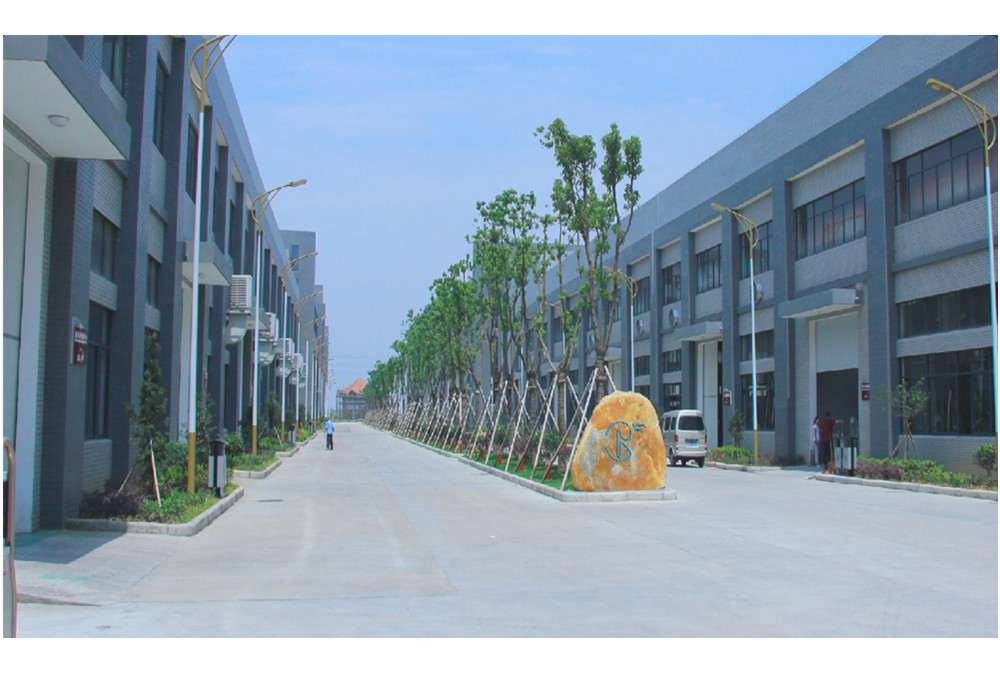
CHUANGRONG is an industry-and-trade integrated company established in 2005, specializing in the full-range production of high-quality HDPE Pipes & Fittings (from DN20 to DN1600mm, SDR26 / SDR21 / SDR17 / SDR11 / SDR9 / SDR7.4), as well as the supply of PP Compression Fittings, Plastic Welding Machines, Pipe Tools, and Pipe Repair Clamps.
Owning five factories and over 100 sets of advanced pipe production lines, plus 200 sets of fitting production equipment, CHUANGRONG's total production capacity exceeds 100,000 tons per year — covering 6 application systems (water, gas, dredging, mining, irrigation, electricity), 20+ product series, and 7,000+ specifications.
Our mission is to provide every customer with a perfect one-stop plastic pipe system solution — professionally designed, fully customizable, and competitively priced to give your business a real profit edge.
The 3 Biggest Pain Points for B2B Importers
Every year, overseas buyers lose tens of thousands of dollars importing HDPE pipes from China — not because of bad products, but because of these three avoidable mistakes.
Hidden & Invisible Costs
The quoted FOB price is rarely your final cost. Buyers routinely overlook import duties, inland freight, port handling, customs brokerage, cargo insurance, and pre-shipment inspection fees — which can add 15–35% to your landed cost.
- Import tariffs (0–12% depending on country)
- Anti-dumping duties in some markets
- Port congestion surcharges (BAF/CAF)
- Customs clearance & documentation fees
- Last-mile delivery to project site
Expensive Ocean Freight
HDPE pipes are bulky and lightweight — a dangerous combination for sea freight. Carriers charge by volume (CBM), not weight, meaning a 40HQ container often carries far less pipe than buyers expect, driving up per-unit freight costs dramatically.
- Pipes are charged by volume, not weight
- Long pipes (6m/12m) limit stacking options
- Large-diameter pipes waste container space
- Freight rates fluctuate 40–200% seasonally
- LCL shipments carry 3–5× higher per-CBM costs
Unreliable Factory Risk
China has thousands of HDPE pipe manufacturers — from ISO-certified industry leaders to small workshops with no quality control. Without proper due diligence, buyers risk receiving substandard goods, missed delivery dates, or even losing deposits to fraudulent suppliers.
- Counterfeit or recycled HDPE raw material
- Wall thickness below SDR specification
- No real certification — only copied documents
- Production delays with no communication
- No after-sales support or warranty
How to Verify a Chinese HDPE Factory
Before wiring any deposit, run this 7-point verification checklist. A legitimate manufacturer will pass every single one — and welcome the scrutiny.
Red Flag: "We Have All Certifications" — But Won't Send Them
Any supplier who claims ISO, CE, or SGS approval but refuses to provide certificate numbers for independent verification should be disqualified immediately. Legitimate certificates are always verifiable online.
-
1Business License Verification: Request the company's Chinese Business License (营业执照). Verify it on China's National Enterprise Credit Information Publicity System (gsxt.gov.cn). Check registered capital, founding date, and legal representative.
-
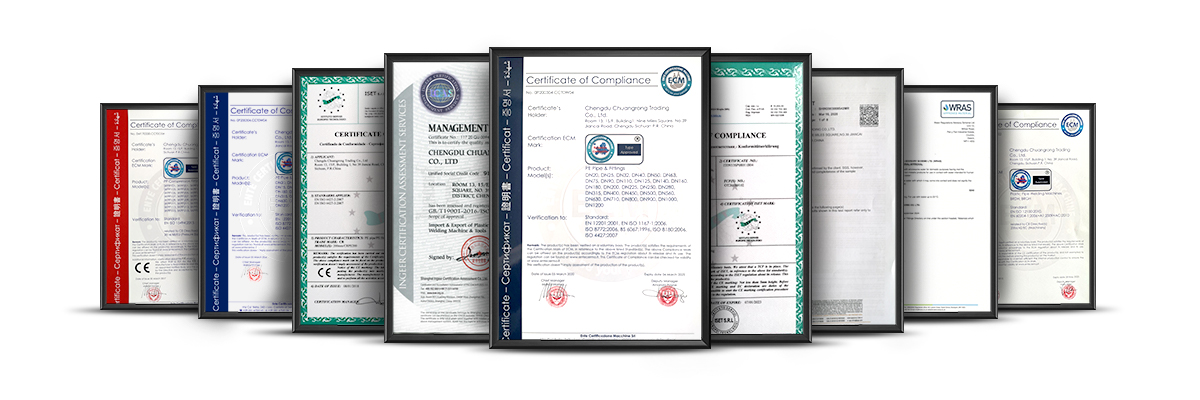
2ISO 9001 Certificate Authentication: Ask for the ISO 9001:2015 certificate with the certification body's name and certificate number. Verify directly on the certifier's website (e.g., BV, SGS, TÜV). CHUANGRONG holds valid ISO9001-2015, CE, BV, SGS, and WRAS approvals.
-
3Product Standard Compliance: Confirm which international standards the pipes meet: ISO4427 / ISO4437, ASTM D3035, EN12201 / EN1555, DIN8074, or AS/NZS4130. Request third-party test reports — not just factory self-declarations.
-
4Factory Audit (Virtual or On-Site): Request a live video factory tour via WhatsApp or Zoom. A real manufacturer will show you production lines, raw material storage, QC lab, and finished goods warehouse without hesitation. On-site audits via SGS or Bureau Veritas provide the highest assurance.
-
5Raw Material Traceability: HDPE pipes must use virgin PE100 or PE80 resin — never recycled material. Ask for the raw material supplier's name (e.g., Sinopec, Borouge, LyondellBasell) and request Material Safety Data Sheets (MSDS) or resin batch certificates.
-
6Export Track Record & References: Ask for verifiable export records — bill of lading copies with buyer details redacted, or reference contacts in your region. Established exporters like CHUANGRONG have served 80+ countries across the Americas, Middle East, Southeast Asia, and Africa.
-
7Pre-Shipment Inspection (PSI): Before final payment, engage an independent inspection agency (SGS, Intertek, QIMA) to verify wall thickness, diameter tolerances, pipe weight, marking, and packaging at the factory — before loading. Budget USD 300–600 per inspection; it's the best insurance you can buy.
🛡 CHUANGRONG's Verifiable Credentials
CHUANGRONG possesses complete detection methods with all kinds of advanced detection equipment to ensure quality control in all processes — from raw material to finished product. Products conform to ISO4427/4437, ASTM D3035, EN12201/1555, DIN8074, and AS/NZS4130 standards, and are approved by ISO9001-2015, CE, BV, SGS, and WRAS. All certificates are available for independent verification upon request.
Pro Tip: Use Alibaba Trade Assurance or LC Payment
For first-time orders, use Alibaba Trade Assurance or a Letter of Credit (LC) at sight. This protects your payment if the supplier fails to ship on time or ships non-conforming goods. Never wire 100% payment upfront to an unverified supplier.
Calculating True Ocean Freight Costs for HDPE Pipes
Ocean freight is the #1 hidden cost killer for HDPE pipe importers. Pipes are volumetrically expensive — here's exactly how to calculate, compare, and minimize your freight spend.
📐 Understanding Volume vs. Weight Freight
Ocean carriers price cargo by whichever is greater: actual weight (kg) or volumetric weight (CBM × 1,000 kg/CBM for FCL). HDPE pipes are hollow and lightweight — a 6-meter DN200 SDR17 pipe weighs only ~28 kg but occupies ~0.22 CBM. This means you're almost always paying for volume, not weight.
For a standard 40HQ container (67 CBM usable), a poorly planned load of DN110 pipes might only fill 38 CBM — wasting 43% of your paid container space and doubling your effective freight cost per meter of pipe.
The solution is systematic container loading optimization — and understanding all freight cost components before you negotiate.
Key Formula: Freight Cost Per Meter of Pipe
Freight Cost/m = (Total Container Freight USD) ÷ (Total Meters of Pipe Loaded). Optimizing your loading plan can reduce this figure by 30–50%.
| Cost Component | Typical Range | Impact |
|---|---|---|
| Ocean Freight (40HQ FCL) | USD 800–4,500 | HIGH |
| Origin Charges (THC, B/L) | USD 150–350 | MEDIUM |
| Destination THC & Port Fees | USD 200–600 | MEDIUM |
| Customs Brokerage | USD 100–400 | LOW |
| Import Duty (varies by HS code) | 0–12% of CIF value | HIGH |
| Cargo Insurance (CIF+10%) | 0.3–0.8% of value | LOW |
| Inland Delivery (port to site) | USD 200–1,500 | MEDIUM |
| Pre-Shipment Inspection | USD 300–600 | INVEST |
🧮 Practical Freight Negotiation Tips for HDPE Pipe Buyers
① Always request FCL (Full Container Load) over LCL: LCL rates per CBM are typically 3–5× higher than FCL. Once your order exceeds 10–12 CBM, FCL almost always wins. ② Book 6–8 weeks in advance: Spot rates can spike 200% during peak seasons (Sep–Nov, Chinese New Year). Forward bookings lock in rates. ③ Compare multiple freight forwarders: Get quotes from at least 3 forwarders. A specialist in construction materials or plastic pipe logistics will often have better rates than a general forwarder. ④ Negotiate on CIF or DDP terms: Ask your Chinese supplier to include freight in their quote — experienced exporters like CHUANGRONG have established carrier relationships and can often secure better rates than you can independently.
Bulk Order Container Loading Optimization
HDPE pipes are the most volume-inefficient cargo in construction supply chains. These proven strategies can increase your container utilization from 55% to over 90% — dramatically reducing freight cost per unit.
Pipe-in-Pipe Nesting (Large Inside Small)
The most effective HDPE pipe loading strategy: insert smaller diameter pipes inside larger ones. For example, nest DN63 or DN75 pipes inside DN200+ pipes. This technique can increase effective pipe quantity per container by 40–70% without increasing container count.
Best for: Mixed diameter orders. Requires careful planning by pipe length and wall thickness.
Save 40–70% SpaceBundle Stacking & Pyramid Loading
Small-diameter pipes (DN20–DN110) are typically bundled in hexagonal or square bundles. Pyramid-stacking bundles in the container eliminates dead air space between rows. Combined with pipe-in-pipe for larger sizes, this maximizes every cubic meter of container volume.
Best for: Small-to-medium diameter pipes. Requires proper strapping and dunnage to prevent shifting.
Save 20–35% SpacePipe Length Optimization (6m vs. 12m)
Ordering 6-meter pipes instead of 12-meter pipes allows double-layer loading in a 40HQ container (internal length ~12.03m). Two layers of 6m pipes = same length capacity with far better vertical space utilization. This alone can increase container fill rate by 25–40%.
Best for: Projects where pipe joints are acceptable. Confirm with your engineer before specifying length.
Save 25–40% SpaceFill Voids with Fittings & Accessories
The gaps between pipe bundles and container walls are prime space for smaller items: elbows, tees, couplings, compression fittings, welding machine parts, and pipe repair clamps. Packing accessories in these voids adds value without adding container cost.
Best for: Mixed orders. Coordinate with your supplier to pre-plan accessory placement in the loading diagram.
Zero Extra FreightContainer Type Selection
Always specify a 40HQ (High Cube) container for HDPE pipes — it provides 67 CBM vs. 54 CBM for a standard 40GP, at only 5–10% higher freight cost. For very large diameter pipes (DN400+), open-top containers or flat-rack containers may be required and should be priced accordingly.
40HQ: 67 CBM | 40GP: 54 CBM | 20GP: 25 CBM. Always choose 40HQ for pipe shipments.
+24% Volume vs 40GPRequest a Loading Plan (装箱方案)
Before confirming your order, ask your supplier to provide a detailed Container Loading Plan (装箱方案) showing exactly how many pipes fit, the nesting arrangement, and the total CBM utilized. Professional suppliers like CHUANGRONG provide this as standard — it's a key indicator of export experience.
A good loading plan should include: pipe quantity, nesting diagram, CBM calculation, gross weight, and packing material list.
Transparency = Trust📦 Real-World Example: 40HQ Container for DN110 SDR17 HDPE Pipe (6m lengths)
Without optimization: Standard single-layer loading = ~1,200 meters of pipe, container utilization ~58%, freight cost ~USD 2.20/meter. With pipe-in-pipe + pyramid bundling: ~2,100 meters of pipe, container utilization ~92%, freight cost ~USD 1.26/meter. Result: 43% reduction in freight cost per meter — on a typical 2,000-meter order, that's USD 1,880 saved on a single container. Multiply across multiple containers and the savings are transformative for your project margins.
Your Step-by-Step Procurement Roadmap
Follow this proven 6-step process to import HDPE pipes from China safely, cost-effectively, and on schedule.
Define Specifications
Confirm diameter range, SDR rating, pipe length, applicable standard (ISO/ASTM/EN/DIN), and total quantity per SKU.
Verify Suppliers
Run the 7-point factory verification checklist. Request certificates, factory video, and sample test reports.
Request Detailed Quote
Get FOB + CIF quotes. Ask for container loading plan, packing list template, and lead time confirmation.
Calculate Landed Cost
Add all freight components, duties, brokerage, and delivery costs. Compare total landed cost — not just FOB price.
Pre-Shipment Inspection
Engage SGS/Intertek to inspect wall thickness, diameter, weight, and marking before container is sealed.
Receive & Verify
Check delivery against packing list. Document any discrepancies immediately and contact supplier within agreed claim window.
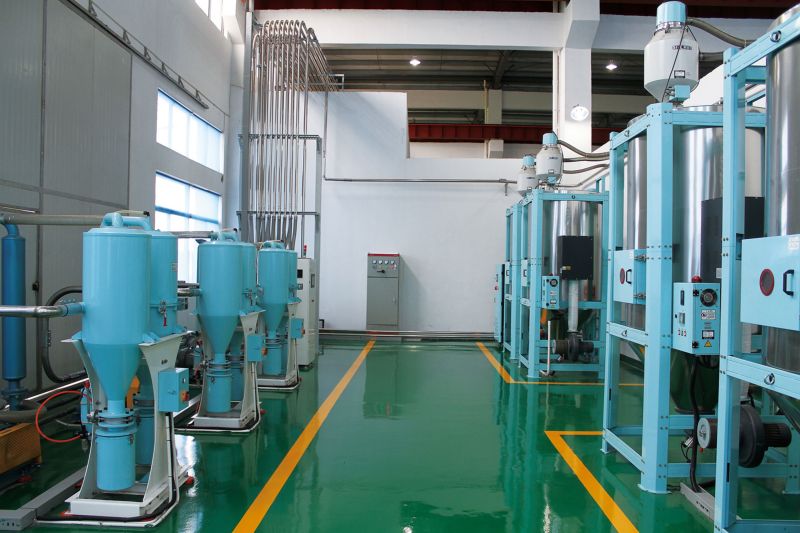
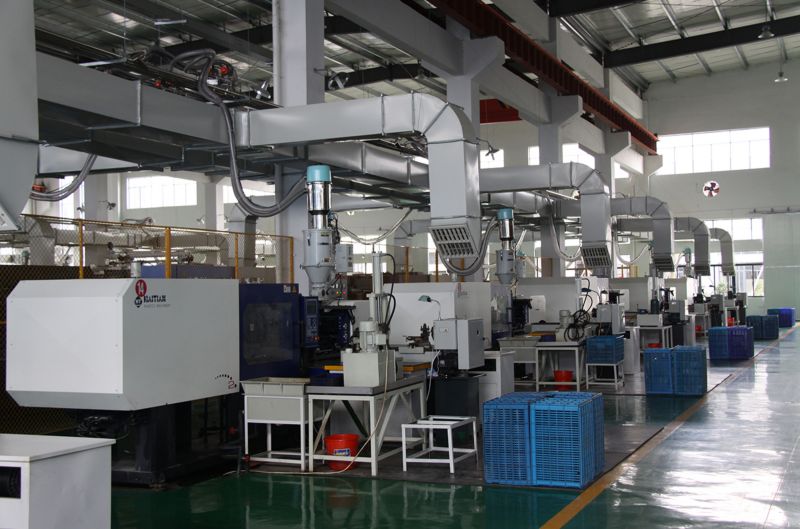
Inside CHUANGRONG's Factories
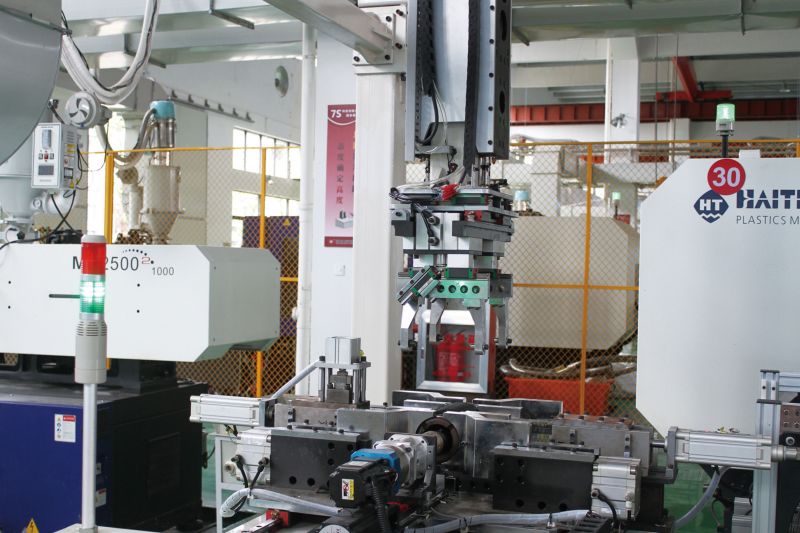
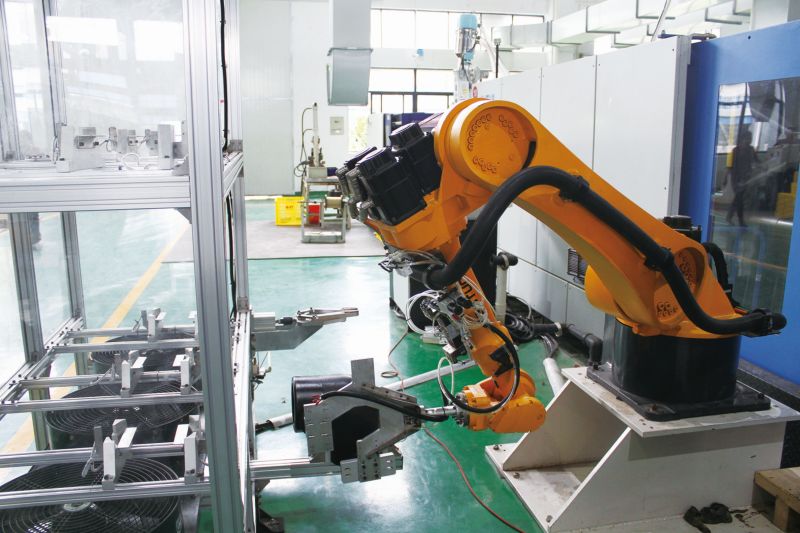
Technology improves lives. CHUANGRONG and its affiliated companies specialize in R&D, production, sale, and installation of new-type plastic pipes and fittings — backed by 100+ advanced production lines.
Quality Assurance: Zero Compromise
CHUANGRONG possesses complete detection methods with all kinds of advanced detection equipment to ensure quality control in all processes — from raw material intake to finished product shipment.
🔬 Multi-Stage Quality Control Process
Every batch of HDPE pipes produced at CHUANGRONG undergoes rigorous multi-stage quality control: incoming raw material verification (PE100/PE80 resin certification), in-process dimensional checks (wall thickness, OD, ovality), hydrostatic pressure testing, and final visual and marking inspection before packing.
Products are certified to comply with international standards including ISO4427/4437, ASTM D3035, EN12201/EN1555, DIN8074, and AS/NZS4130 — covering water supply, gas distribution, mining, irrigation, and electrical conduit applications.
-
✓ISO 9001:2015 — Quality Management System certified across all five factories
-
✓CE Marking — European conformity for applicable pipe and fitting products
-
✓SGS & BV Approved — Third-party verified by world's leading inspection bodies
-
✓WRAS Approved — Water Regulations Advisory Scheme for potable water applications
-
✓Hydrostatic Pressure Testing — Every batch tested to 1.5× rated pressure for minimum 100 hours
-
✓MRS Rating Verification — PE100 resin minimum required strength confirmed by supplier certification
CHUANGRONG's Global Trade Team
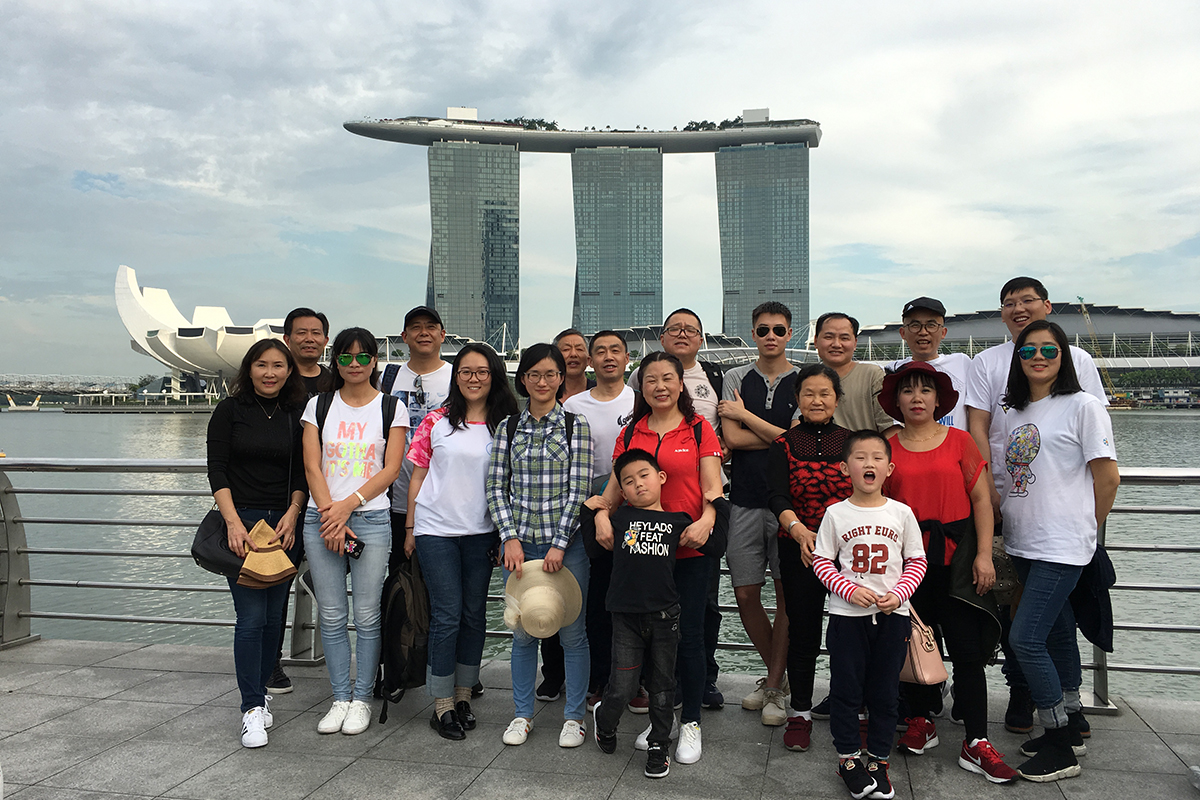
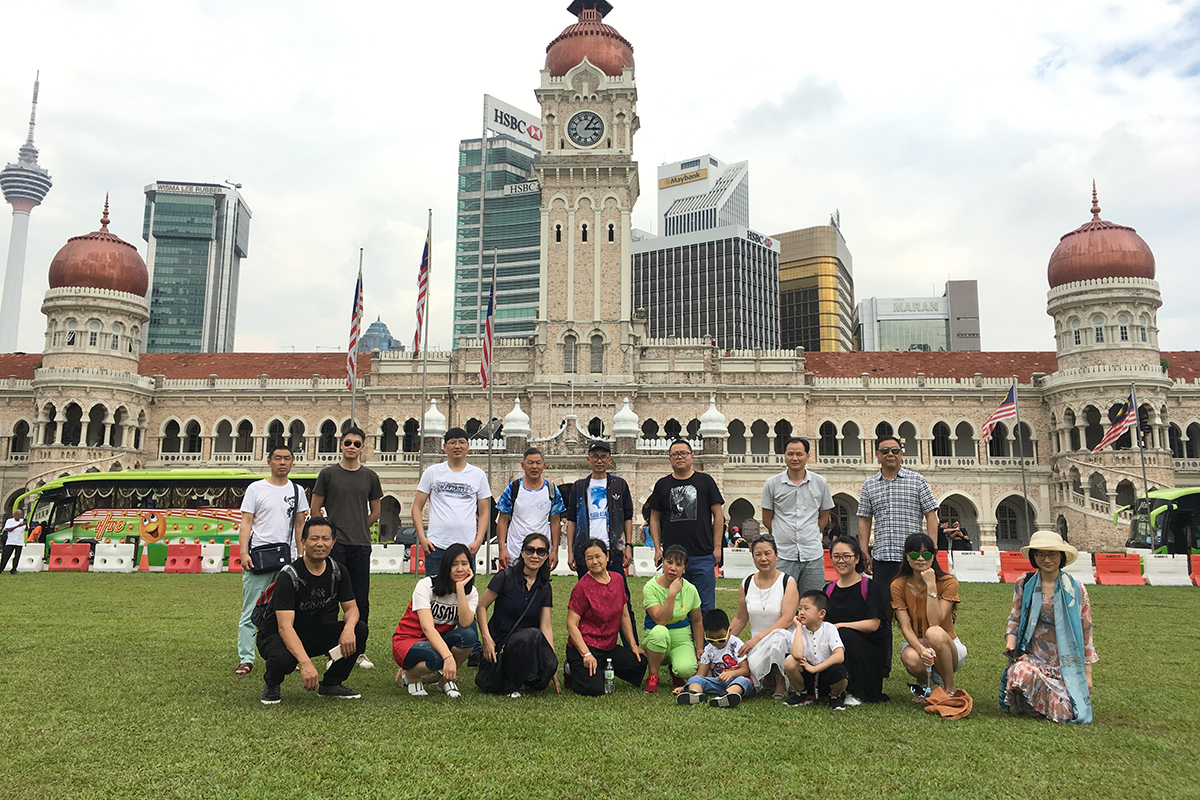
CHUANGRONG is proud to have a highly dedicated, educated, and professional staff committed to customer success. Our core principles: Integrity · Professional · Efficient. When you contact CHUANGRONG, you connect with product specialists who have extensive knowledge of pipe systems, project design, and international logistics.


CHUANGRONG has established business relationships with buyers in 80+ countries and regions across the globe:
🚀 Ready to Source HDPE Pipes from China — the Right Way?
Get a competitive quote with full container loading plan, certified product specifications, and transparent landed cost breakdown. CHUANGRONG's export team responds within 24 hours.
Get Your Free Quote & Loading Plan
Social Links


Our Company
information
Quick Links
contact us
-
ADD:
Room 911, Building T1, The Ring Center, No.333 Dongda Road, Chengdu, China.
- TEL: 0086-18180897627
- EMAIL: chuangrong@cdchuangrong.com
Hot Products - Sitemap - AMP Mobile
Hdpe Pipe Fittings, Repair Clamp, Hdpe Pipe And Fitting, Male Adaptor, Pe Water Pipe, Hdpe Pipe Fitting,
-

Phone
-

E-mail
-

Whatsapp
-

Skype
-

Top
